When someone calls 911, what they often need is not law enforcement, but help.
They might need help filling out housing applications, a mediator to de-escalate a conflict or someone to talk to – a friendly face and a bottle of water. But traditional emergency systems are not always built to respond to those needs.
In Northampton, a majority of these cases are now handled by the Division of Community Care (DCC), a civilian organization committed to providing people with the resources they need, when they need them.
The DCC has developed over the last several years, emerging from Northampton’s Policing Review Commission in 2020 after the community demanded reform from the city and the police department. Now, working with over 35 community organizations, the DCC aims to “be that safety net, to stop people from falling through the cracks of society,” said Director Don Gibbs.
We analyzed all data available from the DCC, via a public records request, to learn how the new organization has interfaced with the community, and how successful they’ve been at meeting their original mandate over their first few years of operation.
Since officially beginning operations in September of 2023, the DCC has grown significantly in operational ability, and are well on their way to becoming an established pillar of the Northampton community.
According to the policing commission’s report, the DCC was originally to be funded by a 10% budget cut from the Northampton Police Department made by the city government to reinvest into the community. The commission also advised that grant money should not be the main source of funding, because of the importance of the division and unpredictability of grant funding.
The DCC’s mandate comes from The Policing Review Commission’s ultimate recommendation that “the City establish a new Department of Community Care” including services like “peer response to mental health and substance use crises.”
The DCC currently has a staff of 10, and works as a division of the Department of Health and Human Services.
A System Born From Reform
The DCC emerged from a broad push for policing reform, but its original vision was more expansive than what it is today, said a former Department of Health and Human Services (DHHS) employee who wished to remain anonymous.
Originally, the DCC was imagined to be a fully independent department, with a civilian-led, non-police response team with the goal of handling non-violent public safety concerns like wellness checks, interpersonal conflicts and quality-of-life issues, the former DHHS employee said. The main goal was to create an alternative to the police force that could respond without the threat of escalation that often comes from traditional policing, according to the policing commission’s official recommendation.
“Many cities […] began to examine their police departments and their policing practices. There was a kind of philosophical movement behind it, loosely referred to as ‘defund the police,’” said Nnamdi Pole, a member of the Northampton Policing Review Commission.
For many members of the Northampton community, that meant decreasing police involvement around Northampton.
“There was a large contingent of people who were speaking for the unhoused,” said Pole, whose research focuses on ethnic minority mental health and racial justice. “It really struck me. I entered this work expecting [that] I would be dealing with racial justice, and a lot of the emphasis [was] on housing justice and how [the police] treated unhoused people.”
The process of starting the DCC was one impacted by a sense of urgency but also many constraints. Northampton community members wanted to see immediate change, while city officials needed to work within existing political and institutional structures, according to the former DHHS employee.
“I think they started with one intention […] and then got flooded with more people than they were planning for,” said Jacob Koffman, a Northampton native and local busker. “There’s just not enough of them to go around.”
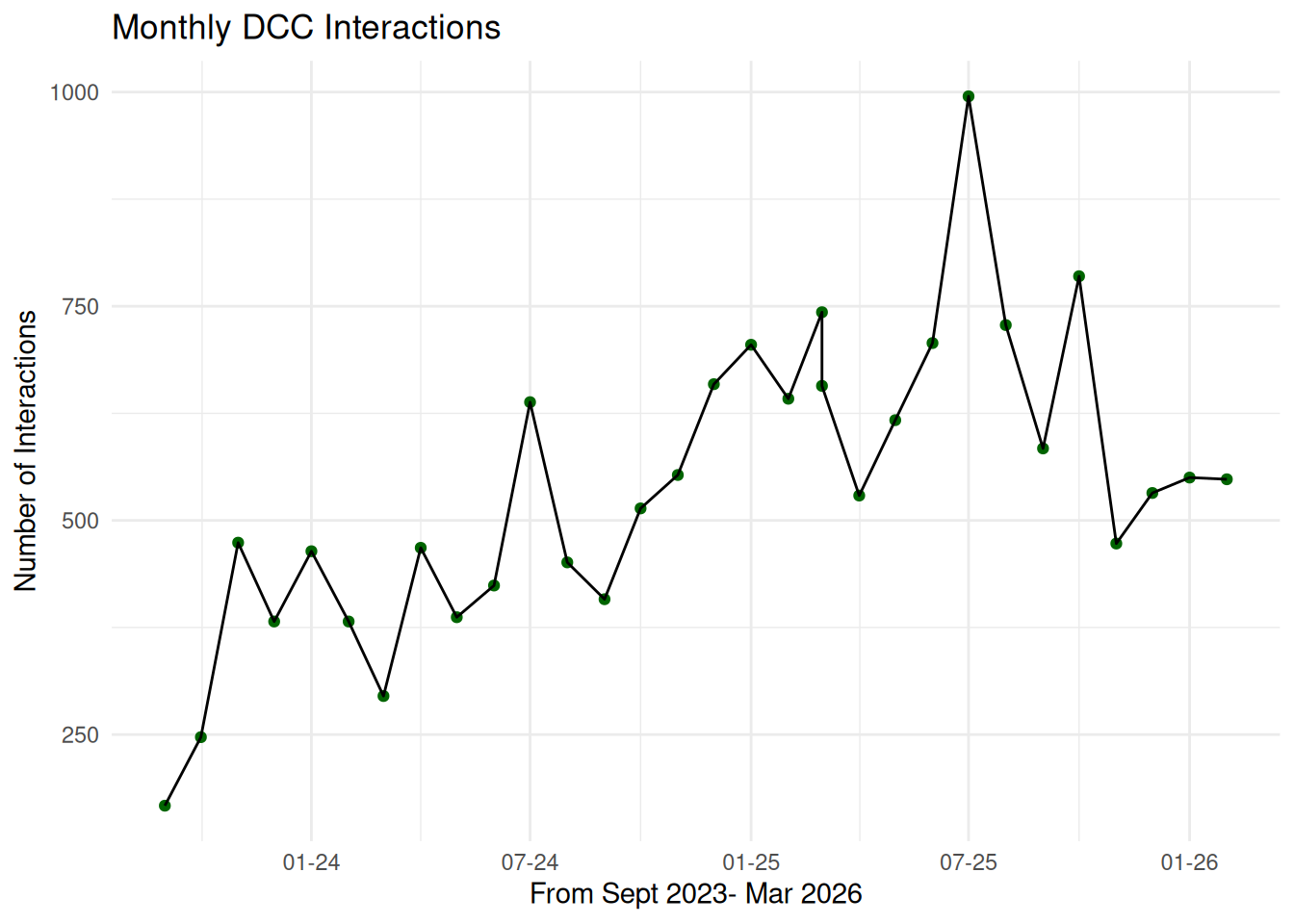
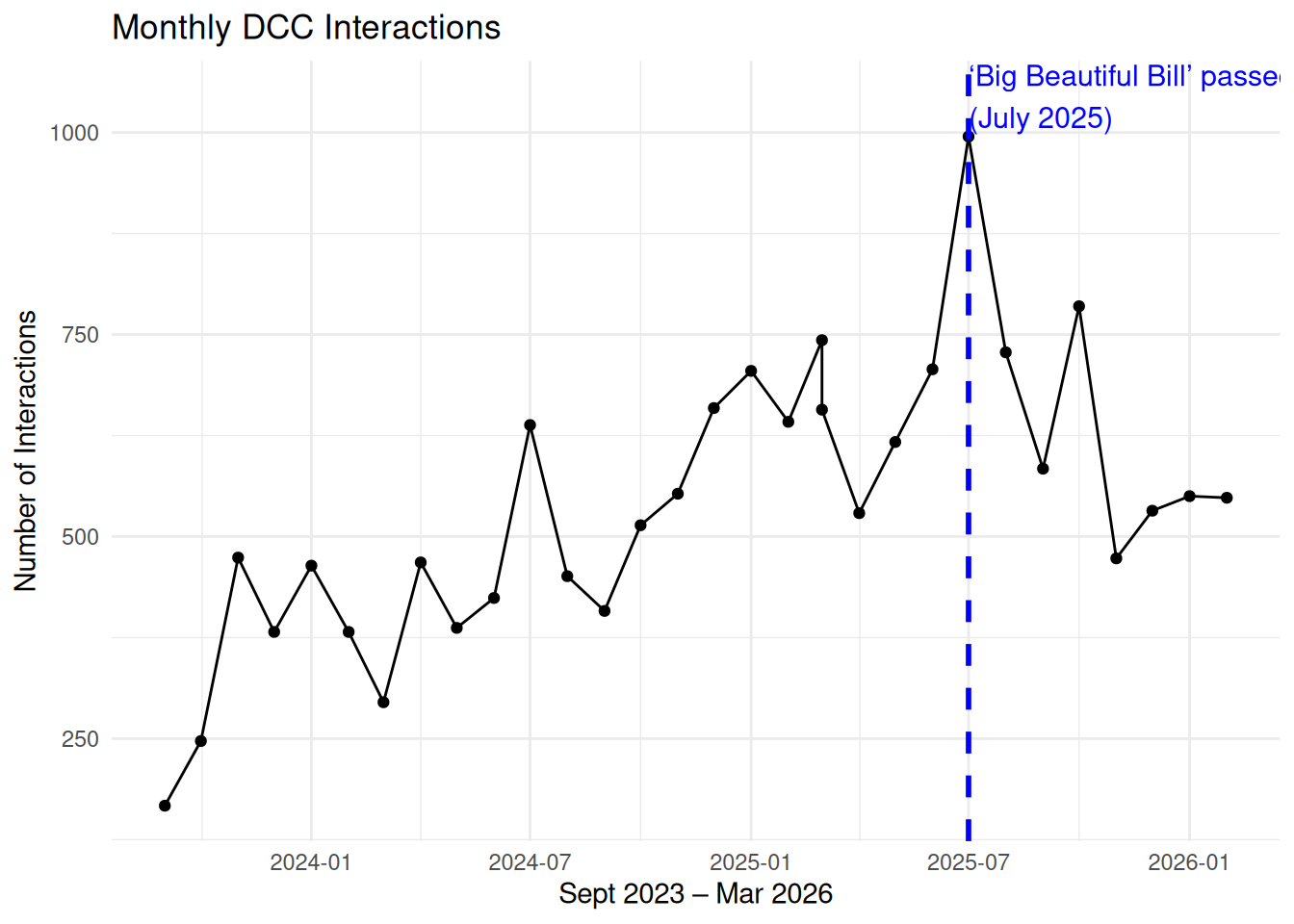
The graph shows the DCCs monthly interactions from their early days in 2023 until March of this year.
One spike in demand was in July of 2025, when job creation slowed after the “Big Beautiful Bill” was passed through Congress.
During that month, the total number of calls and visits to the DCC’s community space reached nearly one thousand, about a third more than average.
The need for public resources has increased since the COVID-19 pandemic. When speaking about demand for meal assistance, Niki Lankowski, the executive director of Manna Community Kitchen said, “It’s definitely grown significantly, astronomically, really, since the pandemic,” nearly tripling between 2019 and 2023.
Day to Day Operations
In practice, the DCC acts less like a standalone service and more as a connector to link individuals to the services they need. Together, these partnerships form what some, including Lankowski, described as a decentralized “resilience hub,” spread out across the city rather than being housed in one location.
In 2022 the City of Northampton announced that they entered an agreement to purchase the former First Baptist Church building on Main Street, with the intention of renovating the space into a centralized resilience hub. The original vision was for the DCC and other nonprofits to set up permanently and offer resources for the community. A key focus of the project was to better support the city’s unhoused population, hoping to offer a warming center, free meals and on-site social services.
However, soon after the city purchased the building for $3.1 million, the grant money supporting the purchase was pulled by the federal government. As Mayor Gina-Louise Sciarra explained in an interview with the Daily Hampshire Gazette, “Until we can identify funding to finish the building, it’s sort of in stasis.” At present, there is no current timeline for the project.
Despite the uncertainty surrounding a permanent location, the DCC continues to “provide immediate on the ground support, meeting people where they are to try and meet their needs,” said Anna Ganote, DCC Coordinator. “We will provide de-escalation, mediation, wellness checks and resource connection services.”
In 2025 the DCC completed more than 8,500 resource connections. Their resource network connects anyone who needs it with assistance accessing government benefits, housing assistance, legal services, health services and more.
“Every person has different needs […] so every call is gonna have a slightly different outcome,” Ganote said.
The new data received from the DCC indicates that they performed 190 wellness checks in 2025 alone, and assisted conflict resolution and deescalation more than 300 times. According to data from the DCC, the team has averaged around 640 interactions per month.
The DCC also provided one-on-one emotional support to community members almost two thousand times.
But the DCC’s goal is more than to just help in times of the most acute crisis. “Often we’ll be working with people on a weekly or daily basis for a period of time,” Ganote said. “In the long term, the goal is always to help them meet their goal,” which could range from securing temporary shelter or achieving permanent housing.
That personal connection is what distinguishes the DCC from traditional emergency response systems. Rather than just resolving a single incident, and then moving on, DCC responders often build ongoing connections with community members over time,
“They have a really nice way of talking to people in a way that’s really affirming to people,” said Lankowski, “but they hold a line of what’s appropriate.”
A Different Kind of First Response
The DCC began its partnership with Northampton Public Safety Dispatch in March 2025. In August 2025, 11 percent of calls received by the DCC were redirected from Northampton Public Safety Dispatch.
Calls referred to the DCC varied in content. According to a report of 911 calls referred to the DCC obtained from the Northampton Police Department, while some people called for themselves, a majority of calls came from community members concerned about others, requesting assistance for them.
The model also relies on collaboration with existing agencies. By receiving calls through the city’s 911 dispatch system, the DCC could integrate into existing emergency infrastructure while staying accessible to the public.
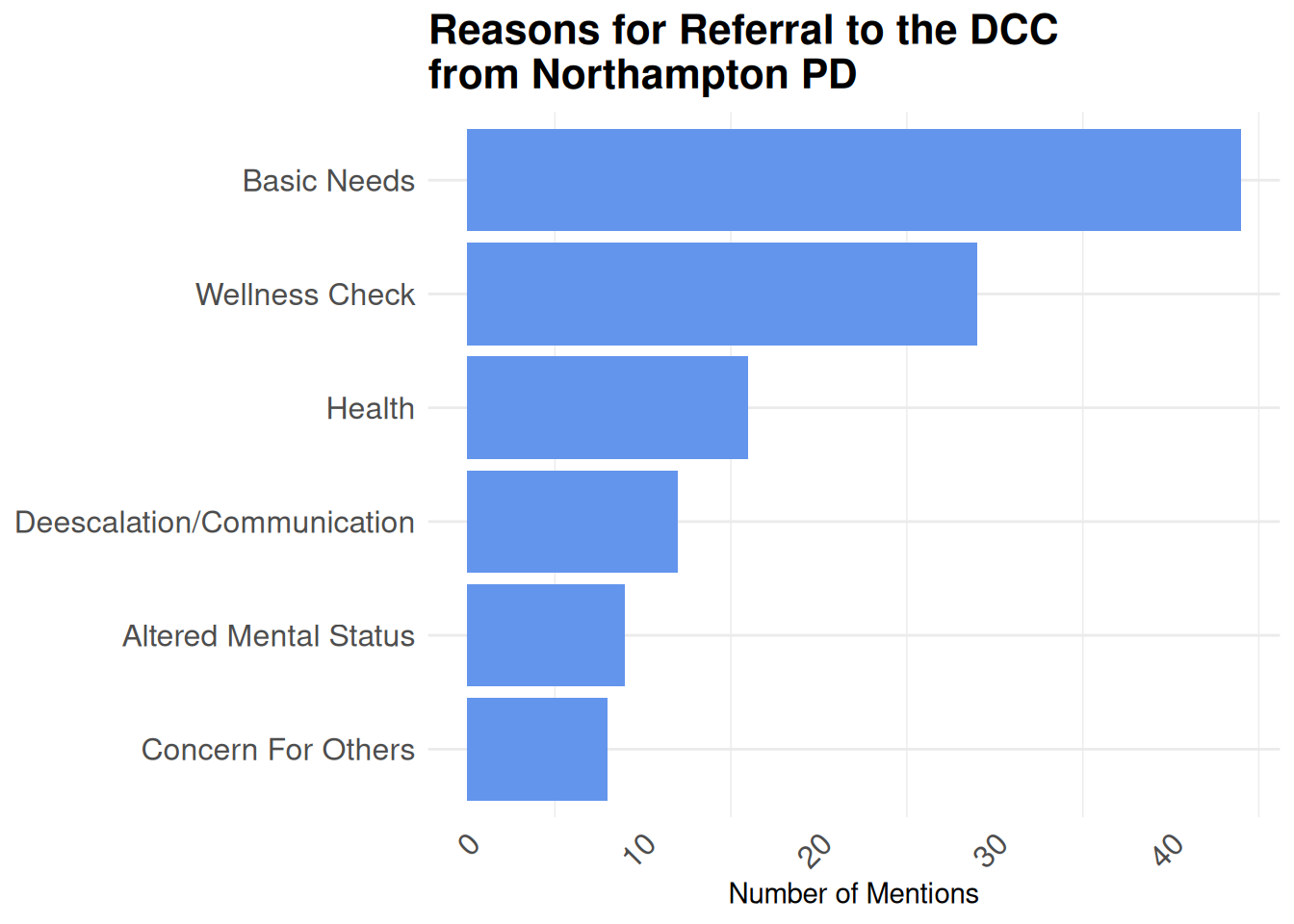
The graph shows an evaluation of 911 calls that were referred to the DCC between January 2024 and March 2026.
When evaluating the data, we discovered the main reason that calls were referred to the DCC was to provide basic needs for community members.
For Gibbs, the disconnect between community members and available resources is exactly why the department exists, “to bridge those gaps, provide that one-on-one support [and] walk through the hard times with people.”
Gibbs emphasized that the DCC is not meant to replace police, but rather to complement them.
“Our core mission is just to be that extra tool for the city,” he said. “We exist for the community.”
The DCC’s design does not ignore existing systems for support as they also have official partnerships with other non-profit organizations in the larger Hampshire County area.
One of their main partnerships is with Manna Community Kitchen, an organization committed to providing those who need it with free, fresh and nutritious meals.
Another partner organization, Tapestry Health, provides comprehensive community health resources, including sexual and reproductive health services, gender affirming care, harm reduction and HIV prevention.
From Vision to Reality
The DCC officially opened in September of 2023, but translating the Policing Review Commission’s vision into reality was more complex than anticipated.
Rather than becoming an independent, fully funded department as was originally envisioned, the DCC was ultimately established as a division of the city’s Department of Health and Human Services.
Unlike the police, the DCC is not a 24/7 service, raising questions about what happens during overnight crises when alternative responders are unavailable.
“What the police could do that almost no other organization can do is respond to things at any time of day,” Pole said.
Even as demand grows, the structure of the DCC’s operations reveals key gaps in when support is available.
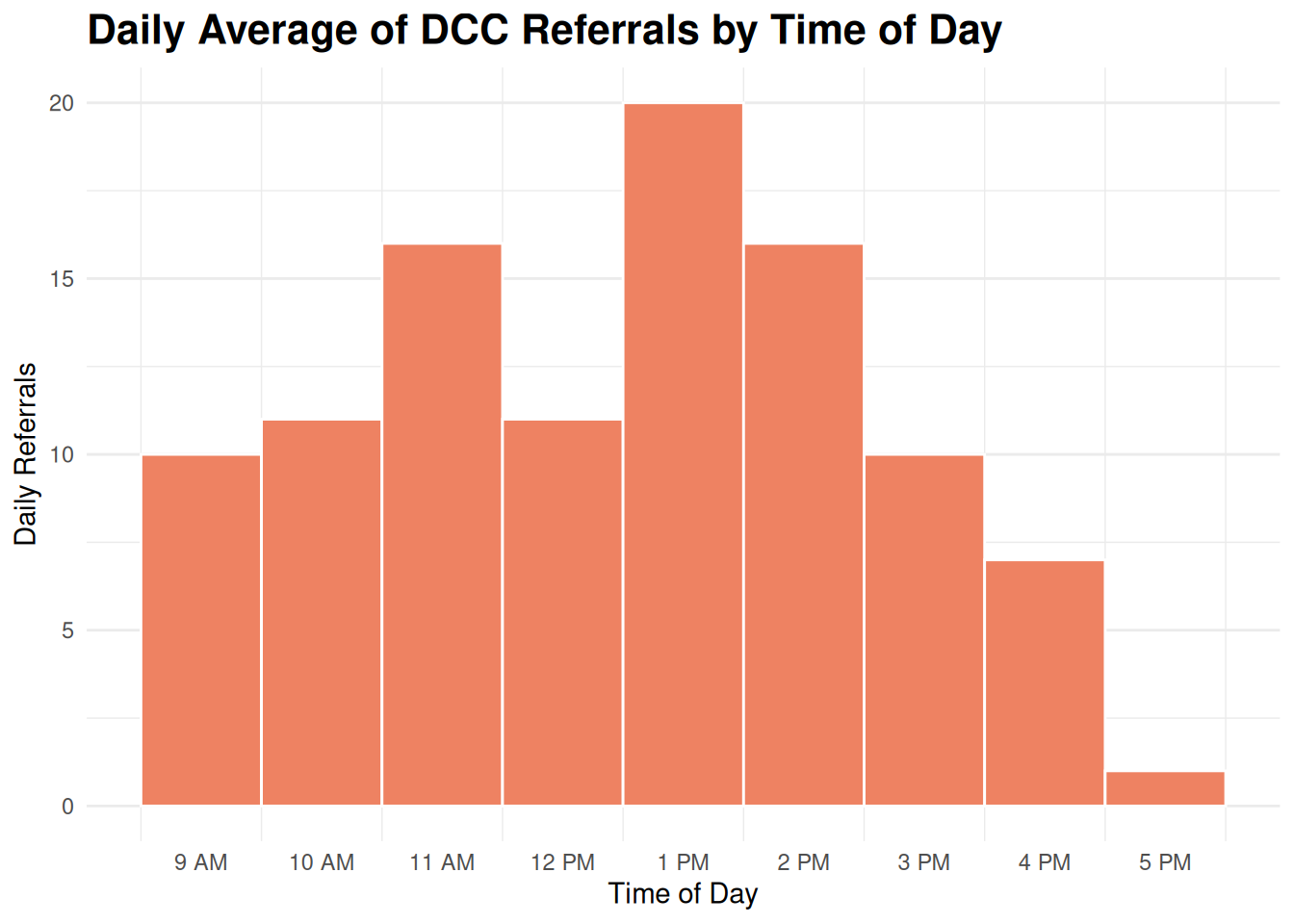
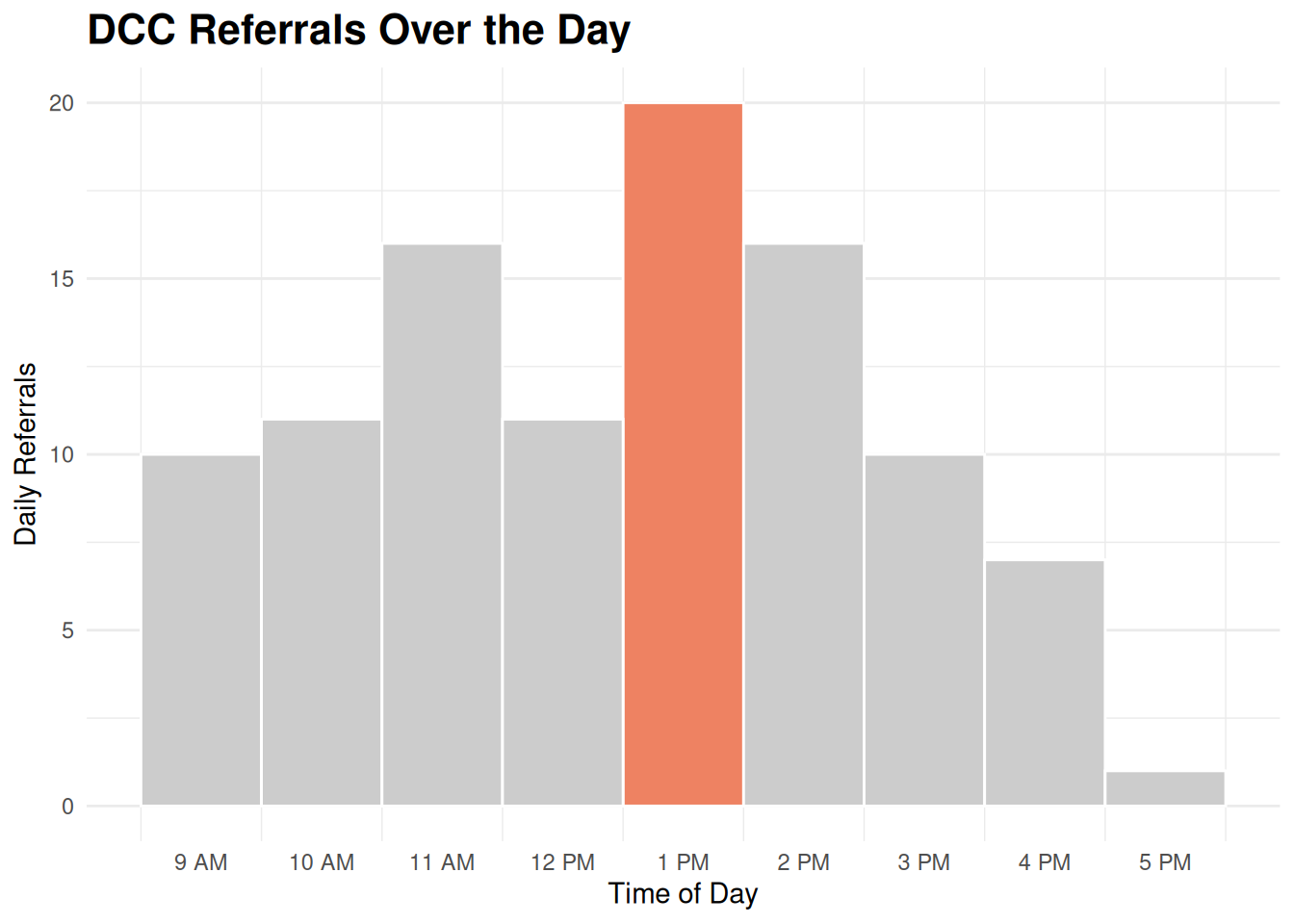
Of the calls that the DCC receives, 11% of them are referred through Northampton Public Safety Dispatch. The chart shows the times during the day when people were referred from 911 to the DCC between January 2024 and March 2026.
The peak time for calls referred to the DCC through Northampton Public safety dispatch was 1 pm in the afternoon.
The DCC’s operating hours have historically followed a 9-to-5 schedule, and most calls are made to the DCC’s office directly, with 187 calls directly to the DCC in March 2026 alone.
This raises the question of if there would be demand for the DCC during the hours that they are not currently open.
The creation of the DCC was a major shift in how Northampton approaches public safety, emphasizing care, flexibility and community-based solutions.
The department responds in real time, either through direct calls or referrals from Northampton’s 911 dispatch system. But, with such a broad reach, it can be difficult to define exactly where the DCC fits within the city’s ecosystem.
“One of our big superpowers is the ability to adapt to the current need,” Gibbs said. “The current need today might not be the current need tomorrow, [it’s about] finding clever ways to adapt to any situation.”
A System Stretched Thin
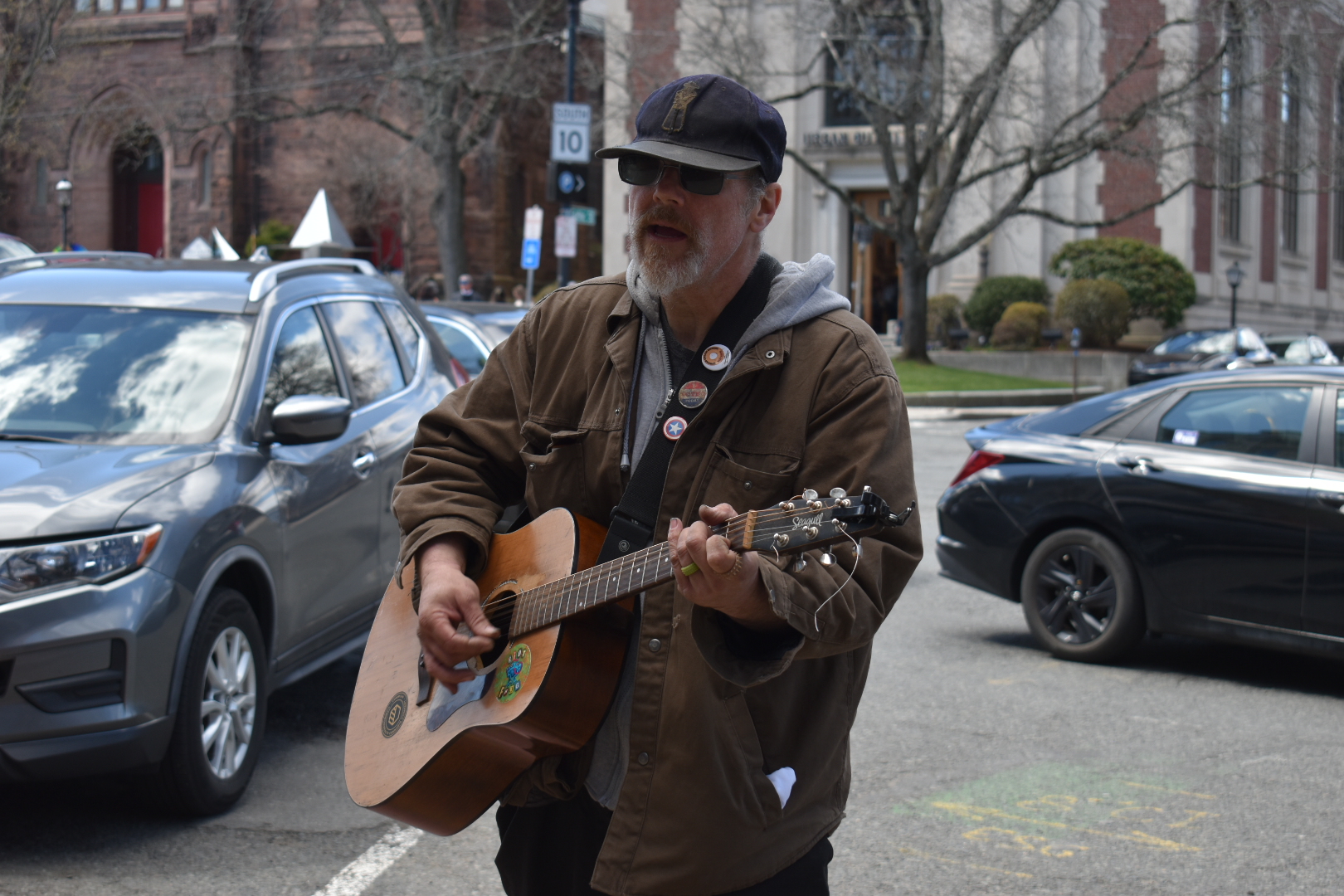
“They’re very well meaning, they really do their best,” said Jacob Koffman. “They’re just overwhelmed with the volume of people who need help.”
The challenges that Koffman sees reflect broader issues on a broader scale. The challenges that the DCC is responding to extend beyond the reach of any department, especially for one that is still developing.
In that way, the Division of Community Care exists in a space that is both essential to the Northampton community, and extremely limited in its functionality. It is one that can step in when traditional systems fall short, but it is constrained by funding, staffing and time.
The DCC and Northampton as a whole are still adapting to the needs of the community. Constantly evolving, these needs are difficult to predict yet crucial to address. The DCC was designed to address needs and challenges with speed and efficiency.
The Division of Community Care reflects a growing recognition that public safety includes individual support, but its future depends on whether or not the city is willing to invest time and resources into that vision.