function (.data, ...)
NULLfunction (.x, .f, ..., .progress = FALSE)
NULLfunction (.data, ..., .by = NULL, .preserve = FALSE)
NULLMini-Lecture 8
Smith College
2024-10-10
I wonder if the base
functionpackage in R have some kind of code that operates the dots?
tidyverse doesn’t do anything special with the dotsI’m still confused how R knows which function to pass
...to? It didn’t look likeprint.default()was mentioned in the body ofprint.factor()for example
print() was called!NextMethod()Does placement of
...matter? I mean I’m pretty sure it would, since we saw difference incidences where it’s placement varied.
In the
scale_color_smith()example, why do we need...in both the outer and inner functions?
“‘…’ used in an incorrect context”
can you split up the arguments that are captured by the dots?
You need to know:
map()
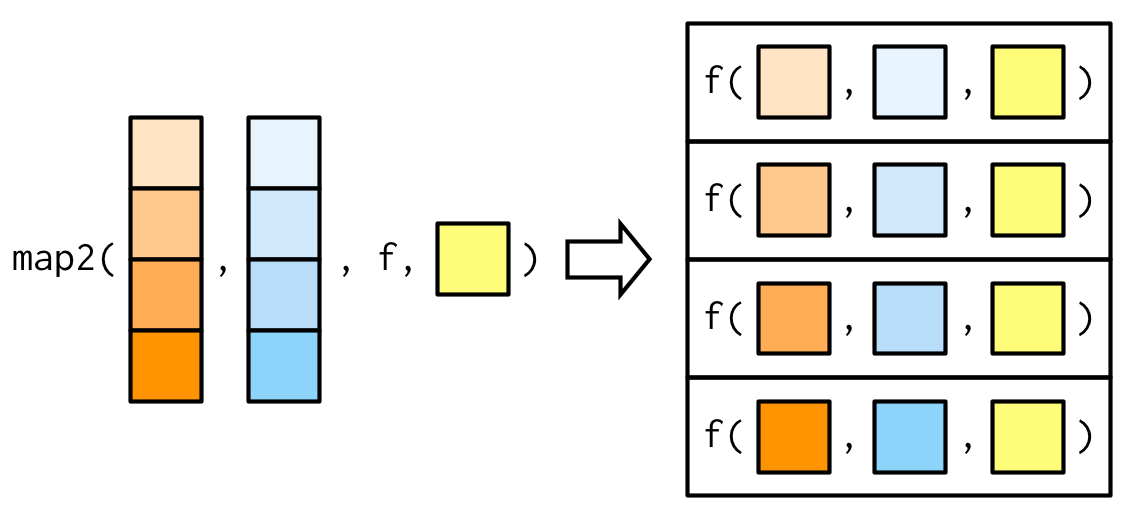
map2()
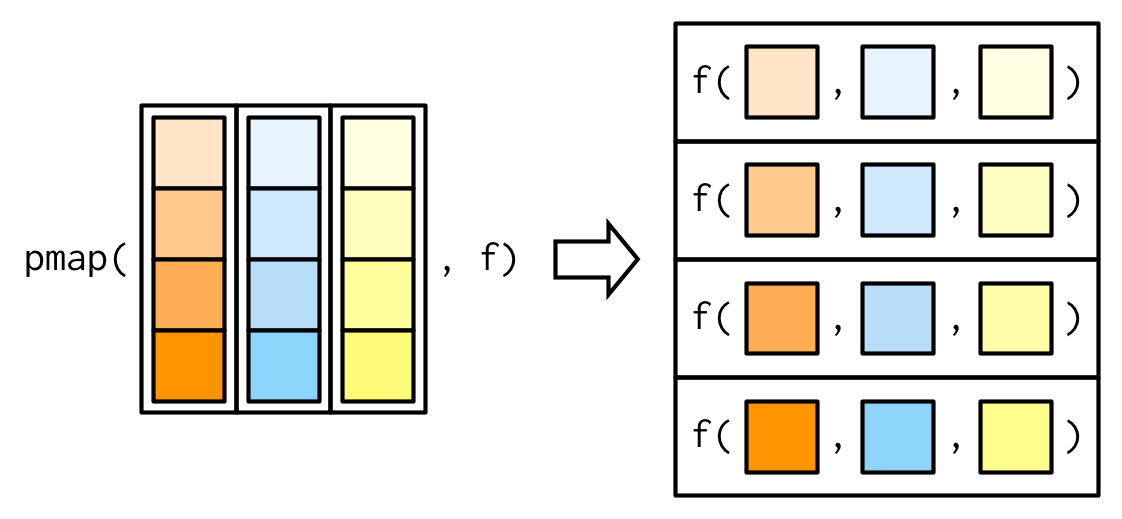
pmap()
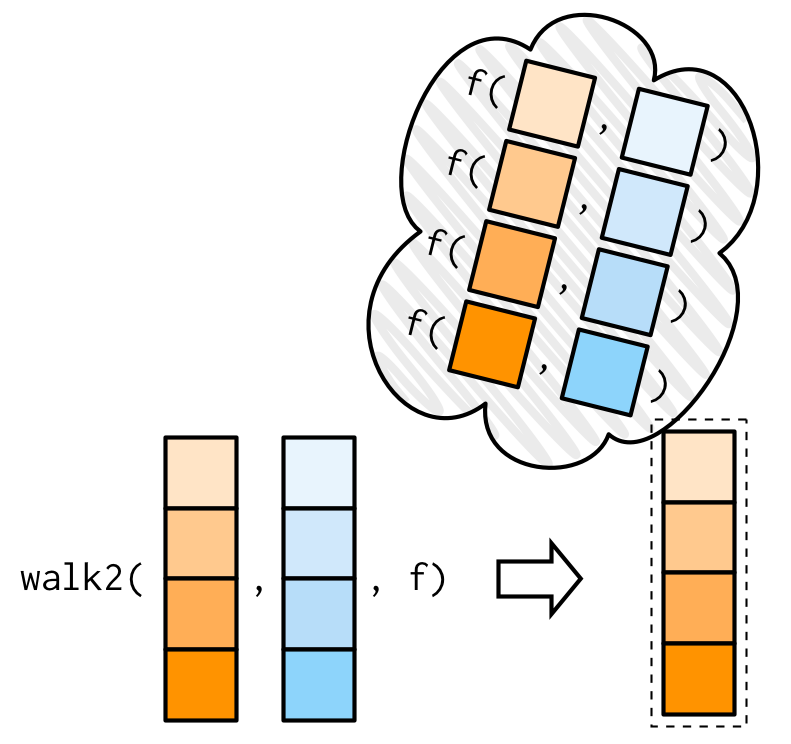
walk()
Don’t worry as much about:
modify()
imap()
reduce()
accumulate()
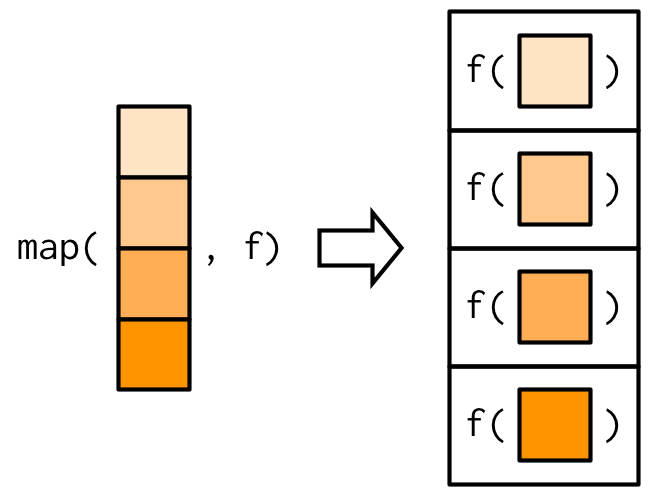
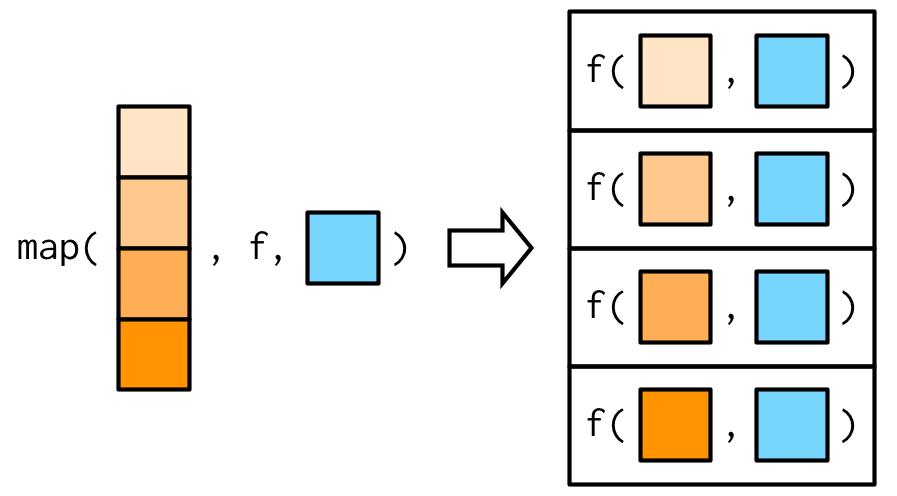
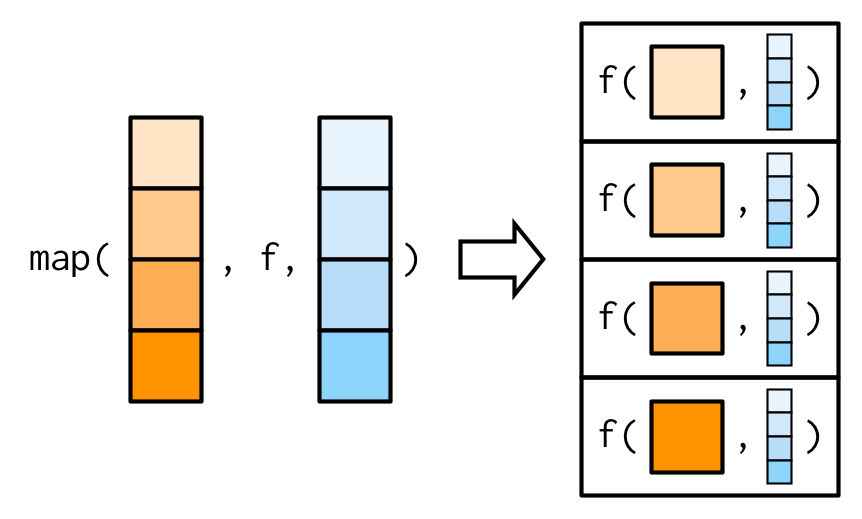
map() (is just lapply())map() with scalar second argumentmap() with vector second argumentmap() examplesmap2() with scalar third argumentmap2() examples# A tibble: 5 × 3
species sex gender
<chr> <chr> <chr>
1 Human male masculine
2 Droid none masculine
3 Droid none masculine
4 Human male masculine
5 Human female feminine [1] TRUE FALSE FALSE TRUE TRUE TRUE TRUE FALSE TRUE TRUE TRUE TRUE
[13] TRUE TRUE TRUE FALSE TRUE NA TRUE TRUE TRUE FALSE TRUE TRUE
[25] TRUE TRUE TRUE TRUE TRUE TRUE TRUE TRUE TRUE TRUE TRUE TRUE
[37] TRUE TRUE TRUE TRUE TRUE TRUE TRUE TRUE TRUE TRUE TRUE TRUE
[49] TRUE TRUE TRUE TRUE TRUE TRUE TRUE TRUE TRUE TRUE NA NA
[61] TRUE TRUE TRUE TRUE TRUE TRUE TRUE TRUE TRUE TRUE TRUE TRUE
[73] TRUE FALSE TRUE TRUE TRUE TRUE TRUE TRUE NA TRUE TRUE TRUE
[85] TRUE FALSE TRUE [1] FALSE FALSE FALSE FALSE TRUE FALSE TRUE FALSE FALSE FALSE FALSE FALSE
[13] FALSE FALSE FALSE FALSE FALSE NA FALSE FALSE FALSE FALSE FALSE FALSE
[25] FALSE FALSE TRUE FALSE FALSE FALSE FALSE FALSE FALSE TRUE FALSE FALSE
[37] FALSE FALSE FALSE FALSE FALSE TRUE FALSE FALSE TRUE FALSE FALSE FALSE
[49] FALSE FALSE FALSE FALSE FALSE TRUE FALSE FALSE FALSE FALSE NA NA
[61] FALSE FALSE TRUE TRUE TRUE FALSE FALSE FALSE TRUE FALSE FALSE TRUE
[73] TRUE FALSE FALSE FALSE TRUE FALSE FALSE FALSE NA FALSE FALSE TRUE
[85] FALSE FALSE TRUEwalk2() example from real life!pmap()pmap() examplefunction (sex, gender, num_chars)
NULL [1] TRUE FALSE FALSE TRUE TRUE TRUE TRUE FALSE TRUE TRUE TRUE TRUE
[13] TRUE TRUE TRUE FALSE TRUE NA TRUE TRUE TRUE FALSE TRUE TRUE
[25] TRUE TRUE TRUE TRUE TRUE TRUE TRUE TRUE TRUE TRUE TRUE TRUE
[37] TRUE TRUE TRUE TRUE TRUE TRUE TRUE TRUE TRUE TRUE TRUE TRUE
[49] TRUE TRUE TRUE TRUE TRUE TRUE TRUE TRUE TRUE TRUE NA NA
[61] TRUE TRUE TRUE TRUE TRUE TRUE TRUE TRUE TRUE TRUE TRUE TRUE
[73] TRUE FALSE TRUE TRUE TRUE TRUE TRUE TRUE NA TRUE TRUE TRUE
[85] TRUE FALSE TRUEpmap() exampleLab #8: Map
Reading quiz on Moodle

SDS 410